
Beyond 'Arigatou'! The Depth of Japanese Gratitude Expressions

By NIHONGO-AI
AI Engineer/Japanese Language Educator
7/1/2025

Beyond 'Arigatou'! The Depth of Japanese Gratitude Expressions
Introduction
Many people who begin learning Japanese learn "arigatou" as one of the first expressions they encounter. However, in actual Japanese communication, expressions of gratitude extend far beyond just "arigatou."
This article explains how to properly use different Japanese gratitude expressions, incorporating practical examples throughout.
Basic Gratitude Expressions
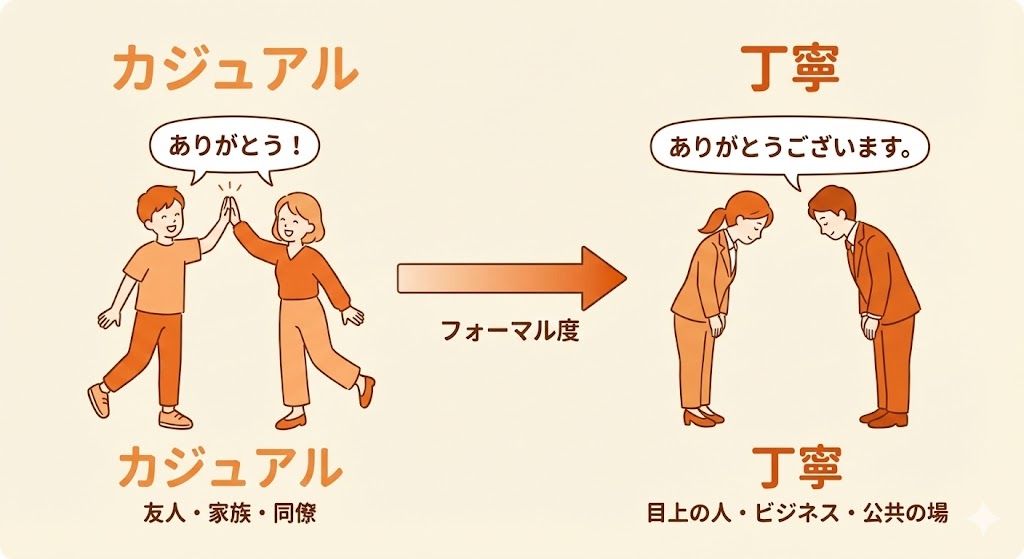
1. Arigatou vs Arigatou Gozaimasu
This is the most fundamental and important distinction to understand.
Arigatou (Casual)
- Close relationships like friends and family
- Colleagues of similar age
- Relaxed, informal situations
Arigatou Gozaimasu (Polite)
- People you're meeting for the first time
- Superiors (bosses, seniors, teachers, etc.)
- Business situations
- Public settings (store clerks, station staff, etc.)
2. The Dual Usage of "Sumimasen"
"Sumimasen" might be one of the most confusing expressions for Japanese learners, because this word can be used for both apologies and gratitude.
"Sumimasen" as an Apology
"Sumimasen, okuremashita" (Sorry, I'm late)
"Sumimasen, machigaemashita" (Sorry, I made a mistake)
"Sumimasen" as Gratitude
(When someone gives up their seat on the train)
"Sumimasen, arigatou gozaimasu"

(When someone gives you directions)
"Sumimasen, tasukarimashita"
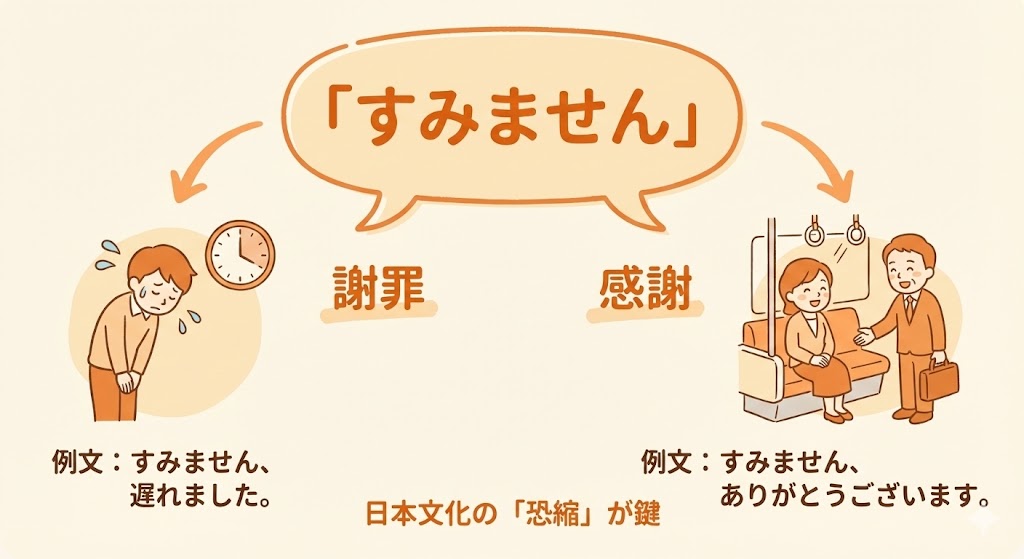
Why can it be used in so many different ways? This relates to the Japanese cultural concept of "kyoushuku" (feeling apologetic for causing trouble).
Practice! Situational Usage
Business Situations
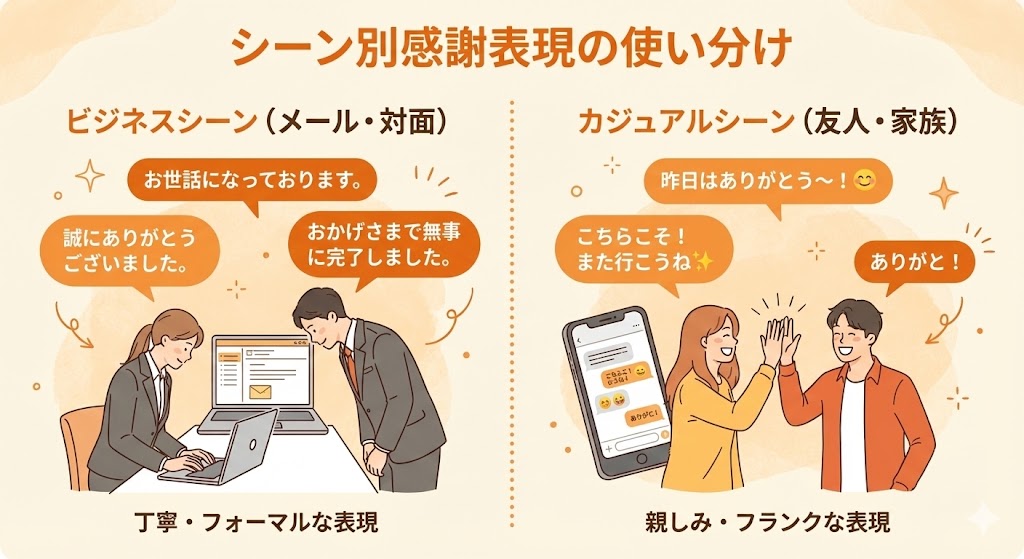
Gratitude in Emails
Subject: Thank you for your cooperation on the project

Mr. Yamada,

Thank you for your continued support.
This is Sato from XX Corporation.

Thank you very much for your cooperation
on the project the other day.

Thanks to you, we were able to complete it successfully.
Key Points:
- Start with "Osewa ni natte orimasu" (Thank you for your continued support)
- Use "Makoto ni arigatou gozaimashita" to emphasize gratitude
- Use "Okagesama de" to acknowledge the other person's contribution
Casual Situations
Conversations with Friends
Friend A: "Thanks for yesterday~! It was so much fun 😊"
Friend B: "Thank you too! Let's go again ✨"
Key Points:
- Use emojis to express casualness
- Variations like "arigatou," "arigato"
- Use "kochira koso" for mutual gratitude
Common Mistakes and Important Notes
Q1: Is "Arigatou Gozaimashita" past tense?
A: No, it's not past tense.
Many learners misunderstand this "mashita" as past tense, but it's actually a form that expresses politeness.
【Present tense is also OK】
"Kyou wa arigatou gozaimasu" (gratitude in the moment)

【Past tense usage】
"Kinou wa arigatou gozaimashita" (gratitude for completed events)
Q2: Is it okay to end with just "Doumo"?
A: It depends on the situation.
"Doumo" is a very convenient expression, but it requires careful usage.
Appropriate situations:
- Close friends
- Casual drinking parties
- Light greetings when passing by
Inappropriate situations:
- Business situations
- With superiors
- Formal occasions
Summary
Let's review the important points about Japanese gratitude expressions:
- Learning to distinguish gratitude expressions is the first step in cultural understanding
- Being conscious of your relationship with the other person is crucial
- Master these through practice
Try to use these distinctions consciously starting today. If you have genuine consideration for others, your feelings will definitely come through, even if your expressions aren't perfect.
We're cheering you on in your Japanese learning journey!
